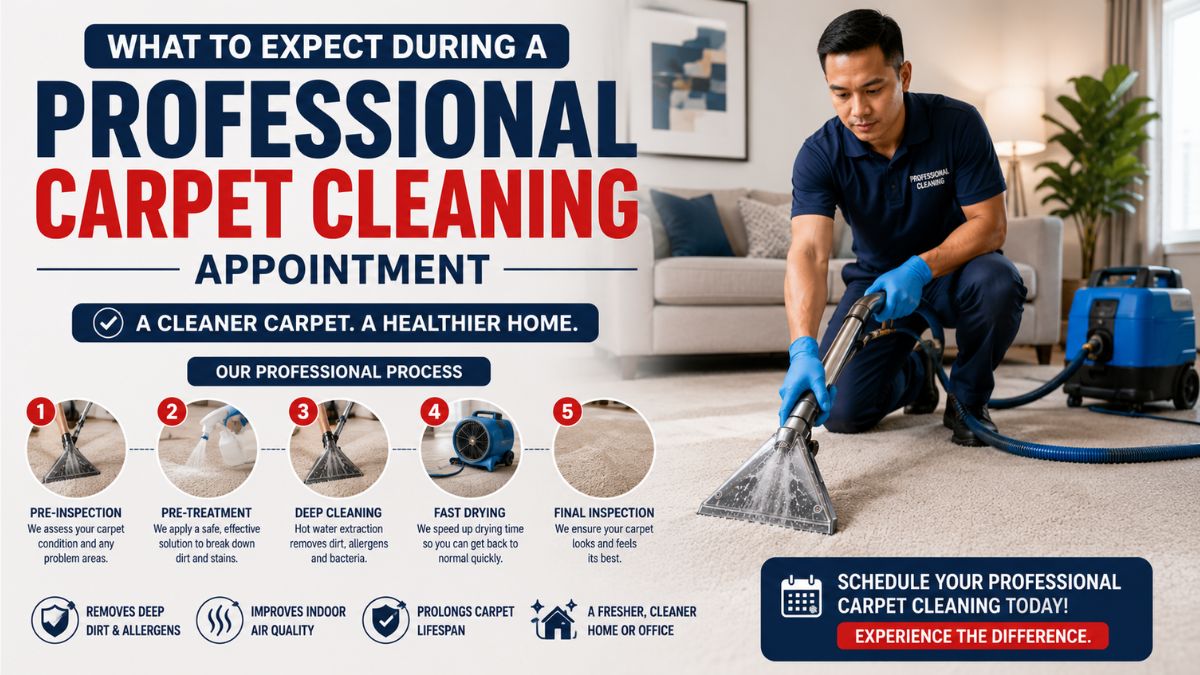
What to Expect During a Professional Carpet Cleaning Appointment
You can expect technicians to inspect fibers, pre-treat stains, use professional hot-water extraction, protect edges and furniture, and explain drying time and aftercare, leaving your carpets cleaner and safer after the professional carpet cleaning service.
Primary Types of Professional Cleaning Methods
You may see technicians choose methods based on fiber type and soil level, balancing drying time, soil removal and cost to match your schedule.
- Hot water extraction
- Steam cleaning
- Bonnet/surface cleaning
- Encapsulation
- Dry compound/low‑moisture
| Hot Water Extraction | Deep, wet cleaning for heavy soils |
| Steam Cleaning | High-temperature cleaning for sanitizing and removing grease |
| Bonnet Cleaning | Surface agitation for routine maintenance |
| Encapsulation | Low-moisture polymers that trap soils for vacuuming |
| Dry Compound | Absorbent powders or pads for quick turnaround |
Hot Water Extraction and Steam Cleaning
Hot water extraction forces heated water and detergent deep into fibers, then extracts soils and moisture with strong suction so you see meaningful soil removal, though drying can take several hours.
Low-Moisture and Dry Chemical Techniques
Dry techniques rely on minimal moisture and quick-drying chemicals, so you experience faster return-to-service and less risk of mildew when you need carpets back in use quickly.
Many low-moisture systems combine encapsulating agents or absorbent compounds with mechanical agitation to break up soils; you should allow the full dwell time before vacuuming for best results. The method often suits commercial environments and fast-turnaround jobs where drying time is limited.
Key Factors Affecting Service Outcomes
You will see that fiber type, carpet age, soiling level, prior treatments and chosen cleaning method all influence final results. Thou should confirm expected outcomes, testing plans and any guarantees before work begins.
- Fiber composition
- Carpet age and wear
- Soiling intensity
- Stain chemistry
- Previous treatments
- Drying and ventilation
Carpet Fiber Composition and Age
Knowing your carpet’s fiber and age guides the technician to select safe temperatures, detergents and agitation so you avoid shrinkage or color loss while maximizing soil removal.
Level of Soiling and Specialized Stain Removal
Heavy soil or set-in stains require targeted pretreatment and stronger extraction, and you should expect spot testing, chemical titration and extra passes to lift discoloration.
Testing for dye bleed, tannin and pet urine establishes which solvents, enzymes or neutralizers technicians will use, so you can anticipate multiple treatments, localized drying measures and a possible recommendation for replacement if fibers are irreversibly damaged.
Step-by-Step Overview of the Cleaning Process
| Step | What you can expect |
| Full Process | You’ll see technicians inspect fibers, pre-treat stains, move light furniture, agitate, extract with hot water, and finish with a neutralizer for quicker, cleaner drying. |
Pre-Inspection and Furniture Moving
During pre-inspection you’ll point out trouble spots while technicians identify fiber type and soil level, then move light furniture and protect delicate items to create clear work areas.
Agitation, Extraction, and Neutralization
After agitation, rotating brushes loosen soils, extraction removes dirty solution, and neutralization restores pH so your carpet rinses cleaner and dries safer.
Agitation uses rotating brushes and targeted detergents to loosen embedded dirt, so you’ll see brown water during extraction as cleaners rinse contaminants. Technicians then perform hot-water extraction, forcing out suspended soils and rinsing fibers with heat and pressure. Neutralization follows to rebalance pH, remove residues, reduce tackiness, and help your carpet stay cleaner longer.
Pros and Cons of Hiring a Professional
You can weigh professional cleaning benefits-thorough stain removal, faster drying, and warranty compliance-against drawbacks like cost and scheduling constraints. Use the table below to compare common pros and cons quickly.
| Pros | Cons |
| Thorough stain and soil removal | Higher cost than DIY |
| Faster drying with commercial equipment | Requires scheduling and possible time off |
| Access to professional-grade cleaners | Furniture moving can cause disruption |
| Helps extend carpet lifespan | May need follow-up spot treatments |
| Supports warranty requirements | Pricing varies with add-ons |
| Reduces allergens and odors | Risk of shrinkage if mishandled |
Enhanced Air Quality and Longevity
Your indoor air improves as deep cleaning removes allergens and trapped dust; professional treatments also help extend carpet life by preventing fiber breakdown.
Potential Downtime and Service Costs
You’ll need to allow time for furniture moving and drying, and expect service fees that vary by carpet size and stain severity.
Plan for at least 2-8 hours of limited use per cleaned area; heavier treatments or deep stains may extend drying times and require professional follow-ups. Prices often reflect method, technician experience, and pre-treatment needs, so get written estimates and ask about guarantees before booking.
Conclusion
You will get a quick inspection, targeted stain treatment, deep hot-water extraction, and efficient drying; technicians will protect edges, move light furniture, and give clear aftercare advice so your carpets return cleaner, safer, and ready for regular use.
Frequently Asked Questions (FAQ)
What should I do to prepare my home before a professional carpet cleaning appointment?
Technician will perform a pre-cleaning walk-through, so clear small items, toys, lamps, and breakables from carpeted areas. Vacuuming beforehand speeds the process, but most companies include a pre-vacuum to remove loose soil. Moveable furniture can be shifted by the crew in many cases; heavy pieces, electronics, and delicate items should be relocated by you or discussed with the company in advance. Secure pets and plan for access to electrical outlets and water for portable equipment if requested. Note visible stains, new damage, or manufacturer warranty requirements and inform the cleaner at arrival.
What happens during the actual carpet cleaning process?
Technician will inspect carpet fiber type, soil level, and any stains to determine the safest and most effective cleaning method. Common steps include pre-treatment of high-traffic areas, pre-vacuuming, targeted stain treatment with a colorfastness test, hot water extraction (often called steam cleaning), and powerful extraction to remove water and cleaning solution. The crew may groom or rake pile to restore appearance and perform a final inspection with you present. Expect different equipment to be used on stairs, upholstery, or area rugs and possible additional charges for heavy furniture moving or pet odor treatments. Some stubborn or old stains may not fully lift; the technician should explain limitations before proceeding.
How long will the carpet take to dry and what aftercare is recommended?
Drying time typically ranges from 2 to 12 hours depending on carpet density, ventilation, humidity, and the type of equipment used, with truck-mounted systems often drying faster. Enhance drying by opening windows, running fans or HVAC, and avoiding foot traffic until the carpet surface feels dry; placing foil or protectors under heavy furniture legs prevents dye transfer or indentation if items must be returned. Spot cleaning should be done by blotting with a clean cloth and contacting the cleaner for guidance on stubborn spots or re-soiling concerns. Follow any written care instructions provided, keep pet access limited until fully dry, and report any unusual damage or residue to the company promptly for follow-up.